
Structured Cabling Contractor & Network Cabling Services
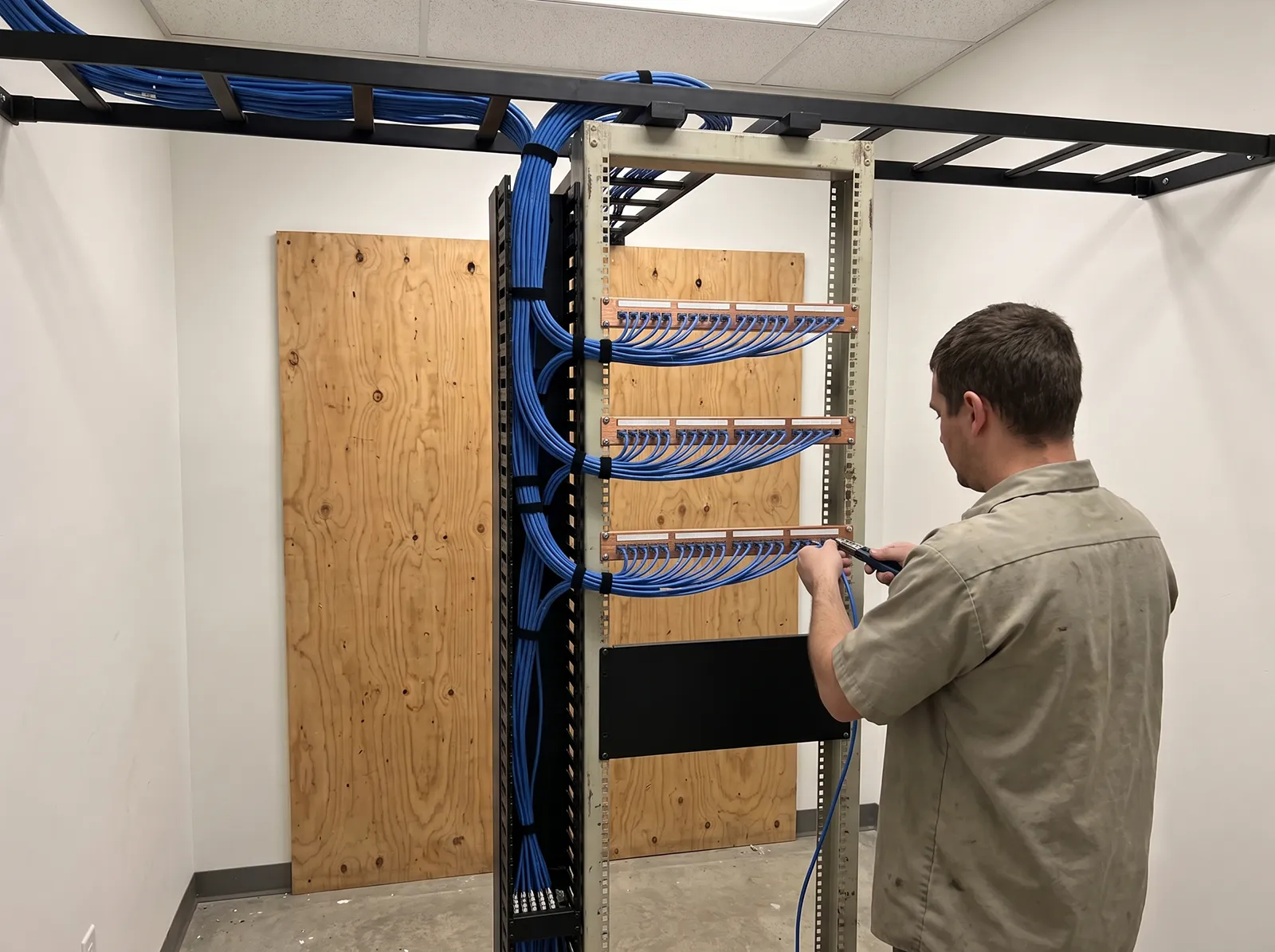
Structured cabling contractor Seralex delivers network cabling services for commercial buildings, multi-dwelling units (MDUs), and data centers across North Carolina, South Carolina, Virginia, and the Washington DC metro area. Our crews install Cat6, Cat6A, and fiber backbone infrastructure built to ANSI/TIA-568 standards. A structured cabling system built to this standard organizes horizontal runs, backbone links, and telecommunications rooms into a single unified network architecture.
What We Install
Seralex installs structured cabling systems covering two core subsystems:
- Backbone cabling (fiber and high-category copper between telecommunications rooms, MDF/IDF)
- Horizontal cabling (Cat6 and Cat6A runs to work area outlets)
Low Voltage and Integrated Systems
Seralex operates as a low voltage contractor, a license classification covering data, voice, fire alarm, and security cabling under a single scope of work. Beyond structured cabling systems, our crews install:
- Security camera and CCTV cable runs
- WiFi 6 access point cabling with PoE (Power over Ethernet) infrastructure
Cat6A matters here: modern PoE devices pull up to 90W per port, and only Cat6A sustains that power delivery across a full 100-meter run without thermal degradation.
Where We Deploy
Commercial building projects start at rough-in, with our crews coordinating directly with general contractors to route pathways before walls close. Structured cabling installers working in occupied buildings follow phased schedules to maintain tenant operations.
MDU deployments (multi-dwelling units such as apartment complexes and condominiums) cover riser installation from ground-floor telecommunications rooms to each floor, horizontal runs, and inside-unit termination. ISPs contracting Seralex for MDU infrastructure cabling get the full vertical build under one scope.
Data center builds in the Loudoun County VA corridor run on the same infrastructure Seralex installs daily: high-density fiber backbone, underground conduit into the facility, and splice work terminating every strand. Our crews deliver the fiber path and building-entry cabling that data center projects depend on.
Standards, Testing, and Documentation
All Seralex cabling installation conforms to ANSI/TIA-568 performance requirements.
Testing methodology matches the media: OTDR testing validates fiber backbone continuity, attenuation, and splice loss, while channel and permanent link certification confirms copper performance against ANSI/TIA-568 thresholds. Every project delivers certification test reports, labeled patch panels, and as-built documentation mapping each cable run from origin to termination point.
Inside Plant Backed by Outside Plant Capability
Walk backward from any outlet in a building. Cat6 runs terminate at a patch panel in a telecommunications room fed by fiber backbone. That backbone enters through a conduit penetration at the demarc. But who installed the conduit? Who spliced the fiber inside it?
Structured cabling typically ends at the building wall. Seralex goes further. Path to Plug is Seralex’s turnkey model covering underground OSP construction through inside-unit installation under a single contract. Our HDD crews bore the conduit path. Our fiber splicing technicians terminate every strand, and our last-mile fiber crews complete the final connection to each unit.
Frequently Asked Questions
Yes. Fire alarm, CCTV, and WiFi 6 access point cabling fall under our low voltage scope.
Both. New-construction crews install pathways, pulls, and terminations before walls close; occupied-building work runs on phased schedules that keep tenant operations running.
Yes. Every project includes ANSI/TIA-568 certification results, labeled patch panel schedules, and as-built documentation, with OTDR data on fiber runs.