
Horizontal Directional Drilling Contractor
Seralex bores, installs conduit, pulls fiber, and completes fusion splicing as a single horizontal directional drilling contractor. ISPs, broadband developers, and telecom carriers across North Carolina, South Carolina, Virginia, and the Washington DC metro area get turnkey conduit-to-splice delivery from one crew, one schedule, one point of accountability.
Horizontal Directional Drilling Services for Telecom
Seralex crews bore and install fiber optic conduit across telecom infrastructure projects, with rigs staged in Charlotte, Richmond, and Northern Virginia for same-week mobilization. Project types include:
- Backbone routes and lateral feeds under state and municipal roads, multi-lane highways, and controlled intersections
- Railroad crossings
- River and waterway crossings for long-haul fiber routes
- Last-mile conduit in MDU communities, including bores under parking lots and landscaped areas
- Data center campus entries in Loudoun County
- Military base perimeter crossings near Fayetteville and Norfolk

Every bore begins with utility locates and potholing to confirm subsurface conditions. Crews execute the pilot bore with MWD (Measurement While Drilling) tracking and advance the drill string along the planned bore path.
Once the pilot is complete, crews back-ream to the target conduit diameter and pull back HDPE fiber optic conduit in a single mobilization. Bentonite-based drilling fluid stabilizes the borehole throughout the process.
Utility Locates and Pre-Bore Site Preparation
Before any bore starts, Seralex crews complete subsurface utility locates using potholing and hydrovac excavation to verify existing underground utilities.
Bore path planning is part of every HDD mobilization: crews map entry and exit points, confirm right-of-way (ROW) access, and coordinate with DOT, railroad, or municipal authorities for required permits.
Site preparation protocols apply to every underground drilling scope, from trenchless drilling under highways to short bores across parking lots.
All field work follows OSHA safety standards.
Conduit and Bore Specifications
- HDPE conduit sizes: 1.25", 2", 4"
- Standard bore depth: 3–6 ft
- Bore lengths per shot: 200–800 ft
- Rock drilling capability: yes
As an underground utility contractor focused on telecom OSP, Seralex sizes every bore for conduit fill ratio and future cable capacity.
From Bore to Splice Under One Contractor
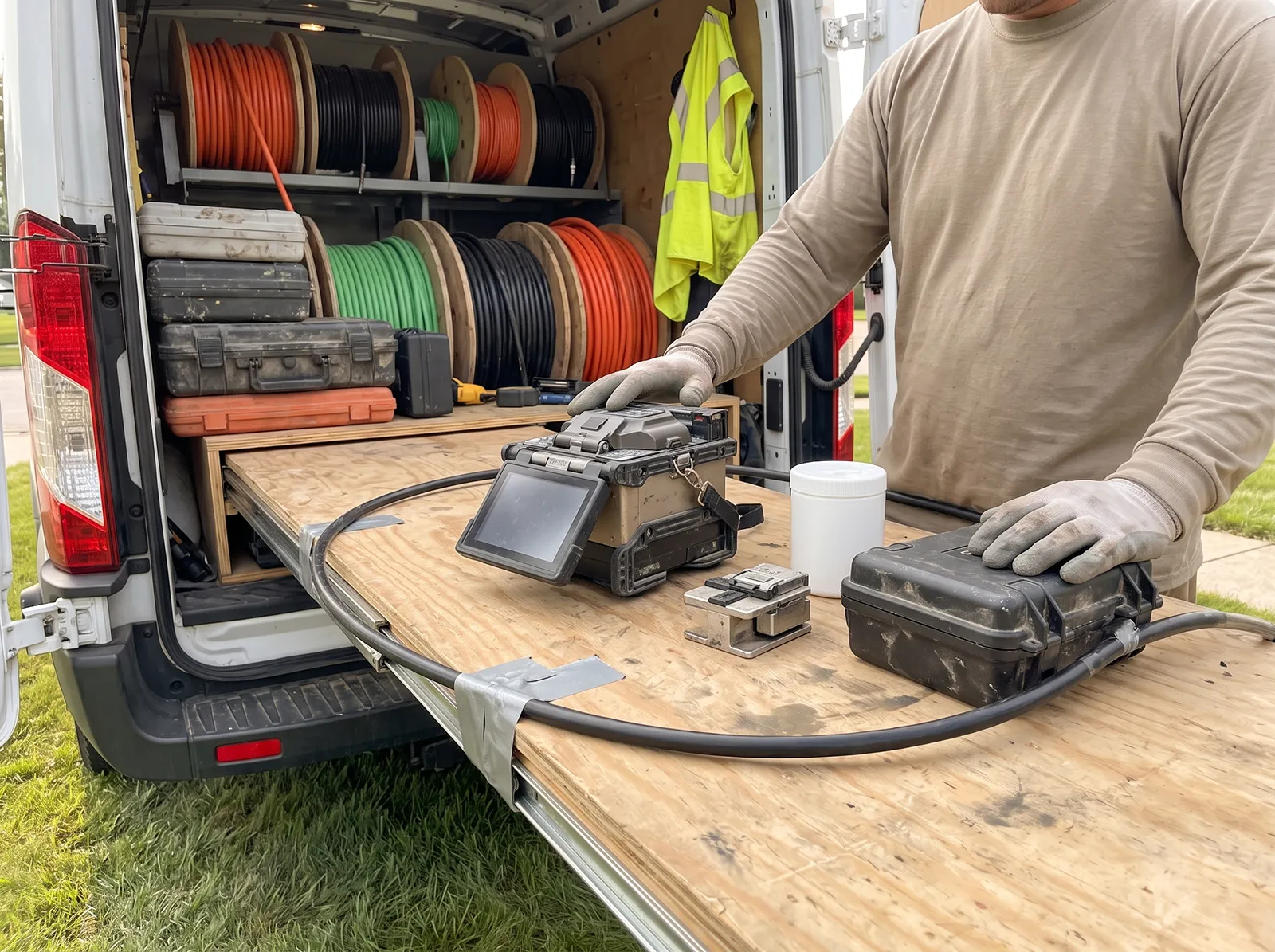
Seralex executes every stage of underground fiber deployment in-house:
- Directional drilling and HDPE conduit installation
- Fiber optic cable pull
- Fusion splicing
We call this Path to Plug: one contractor, one mobilization schedule, one point of accountability from bore entry to lit fiber. Where typical HDD contractors finish at conduit placement, Seralex continues through fiber pull and fiber splicing as a turnkey scope.
Path to Plug keeps your project on a single timeline, eliminating coordination delays across separate contractors. For deployments that extend to subscriber drops and inside-unit activation, our last-mile fiber installation team picks up where the splice crew finishes.
Frequently Asked Questions
Yes. Horizontal directional drilling, directional boring, and horizontal boring all refer to the same trenchless boring method used to install underground conduit without surface excavation.
Yes. HDD entry and exit points are set back from the road surface, so traffic flow continues uninterrupted during the bore. No lane closures, no flagging crews, no traffic control plans required in most cases.
Yes, all in-house on a single schedule.
Start Your HDD Project
Contact our team to discuss bore requirements, site conditions, and scheduling for your fiber build in North Carolina, South Carolina, Virginia, and the Washington DC metro area.